Plywood is an indispensable product for our homes, offices and public spaces. It is the basic structural product for the interior infrastructure industry around the world. Today densified plywood is extensively used in the form of shuttering plywood / film face plywood and LVLs (laminated veneer lumber) in the construction industry as well.
As of August 2026, there are over 90 plywood manufacturing industries in Nepal. Approximately the industry generates a revenue of 36 billion Nrs annually. Over 60% of production is exported to India, making it among the top 10 exports of Nepal. This industry employs over 25000 people directly in the factories and many more indirectly in the cultivation, harvesting and transportation of trees from the rural hills and the farmers in the plains.
Raw Materials
There are 3 major raw materials:
- Wood/Timber for the core: This constitutes 90% in volume and 60 to 70% in value depending on the grade of the plywood being produced. Mostly Nepalese Alder (uttis), eucalyptus (masala), pinewood, simal, chilaune, mango trees are used. These are locally available in the mountainous and hilly regions of Nepal. Some species such as eucalyptus and mango are farmed in the terai area.
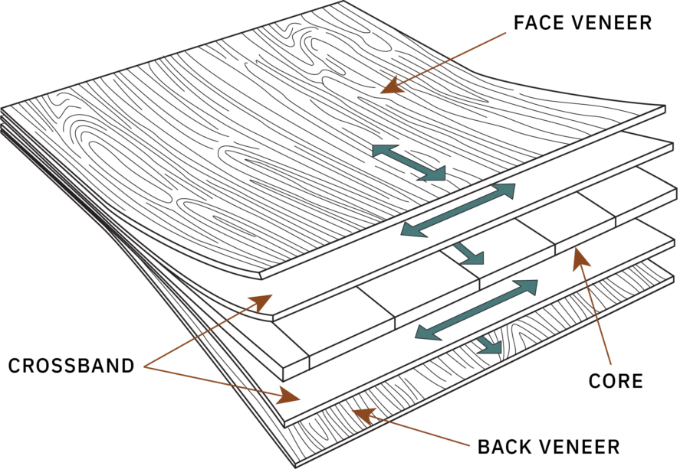
- Face veneer for the surface: Mostly gurjun from Burma, Malaysia and Indonesia, and aucoumae from Gabon are used for the surfaces to give a smooth rich finish.
- Resins for bonding the layers of wood layers: UF (urea formaldehyde) and MUF (melamine urea formaldehyde) and PF (phenol formaldehyde) are used as adhesives/bonding agents in the manufacture of plywood. UF for commercial grade, MUF for moisture resistant and PF for water resistant. Resins are normally imported from India, but a minor portion is imported from China especially melamine.
Quality
There are 4 major grades of plywood being manufactured in Nepal:
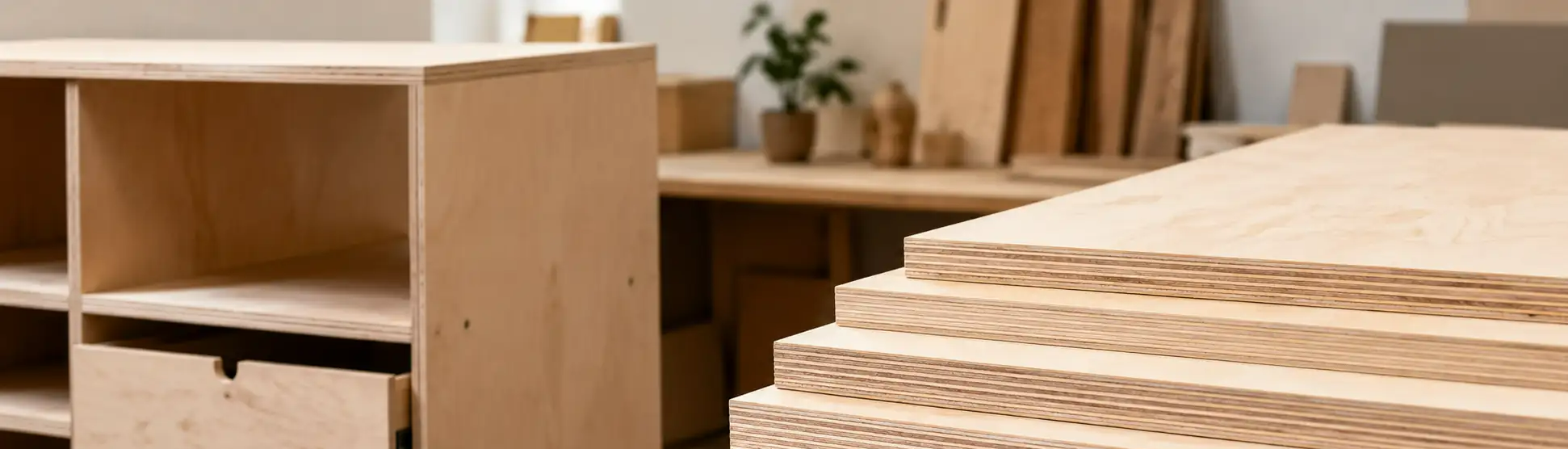
- A Grade: this is the best quality plywood manufactured in Nepal. It is characterized by good quality unjointed full faced veneer on the surfaces. These surfaces should not have knot marks or oil spots. The cores are full cores that are composed to be gap free. The thickness is consistent with a variance of less than 5%. The most popular A grade plywood in Nepal is Shikhar ply, Green ply, Kit ply, Sagun ply and Surya ply. A grade plywood are available in both commercial and water-resistant options. Some manufacturers also provide calibration plywood to ensure uniform thickness for high end furniture manufacturing purposes. Shikhar is the pioneer in introducing calibrated plywood in Nepal.
- B Grade: This is the best option for people who want the best of both worlds, quality and price. B grade plywoods are usually priced 25 to 30% below A grade plywood with only a slight compromise on quality. The major difference is the face veneer that is useful only for the appearance. If the plywood is to be covered by a laminate or a veneer, then there is no point in paying extra for the premium face. The adhesives may vary on the manufacturers, but a particular manufacturer normally uses the same resin for both A and B grade commercial ply. 2 to 3 layers of fali(wood core layers with less than 8 inches width) may be used by most manufacturers. However quality manufacturers who manufacture solely B grade plywood have excess of full core available, so they don’t have to use fali. One of such manufacturers is Kankai plywood. HiTech is Nepal’s leading B grade plywood delivering consistent quality in terms of thickness, less than 2% variance and zero core gaps. HiTech has been the go-to products for Interior designers, furniture manufacturers (OEMs) and contractors for the past 11 years.
- C+ grade: plywood are mostly manufactured for export to India. However, they have also found entry into the Nepalese market as the cheaper versions of B grade plywood. They are usually treated with sodium dioxide giving them a darker color on the surface. This is done especially to hide the low-grade face veneers used. This grade also has core gaps in many places since up to 5 layers of fali is used in its manufacture.
- C grade: plywood are used for economic purposes. They are mostly used for temporary uses such as packaging material, temporary applications and low-grade furniture. Mostly rejected raw materials are used in its manufacture. There are no guarantees in this segment.
Thickness
Plywood is available in 4 major thicknesses: 6mm, 10mm, 12mm and 18mm.
Plywood manufacturers also produce block boards and flush doors. These products are filled with wood strips instead core layers. This makes them warp resistant. They are available in 19mm (block boards), 25mm, 32mm (flush doors) and 38mm (flush doors).
Pricing: Price of plywood in Nepal is very volatile. Rarely has it seen a decline. With the access of Indian market since the last 4 years prices have been increasing in excess of 10% every year. In the past 12 months prices have increased 4 times.
Future
Due to the developing nature of Nepal’s and India’s economy more plywood is being demanded every year. Millions of houses, offices and public buildings are being built every year in Nepal and India. Similarly equal number of renovations and upgrading of living spaces are being carried out with the upgradation of income. Hence, demand for plywood is expected to be on the rise for at least the next 15years. Demand for quality plywood is expected to rise faster.
Conclusion
Nepal’s plywood industry has developed from an import-dependent sector into a major domestic manufacturing and export industry. It supports thousands of workers, creates income opportunities for farmers and supplies essential materials to the furniture, interior and construction sectors.
However, customers should not select plywood only by its grade name, face colour or price. Core composition, bonding, actual thickness, manufacturing quality and application suitability are more meaningful indicators.
As construction, renovation and furniture manufacturing continue to expand, Nepal’s demand for consistent and responsibly manufactured plywood is expected to grow.
For guidance on selecting plywood for furniture or interior projects, visit Carpenters Stop to compare options from Shikhar, Greenply, HiTech, Modern and other available plywood ranges.
Website: www.carpentersstop.com.np
Delivery: Available across Nepal