Wall louvers have become a popular decorative material for modern homes, offices, cafés, hotels and retail spaces in Nepal. Their raised linear patterns add texture, depth and a premium appearance to otherwise plain walls.
In the Nepali market, wall louvers are also commonly known as louver panels, fluted wall panels, charcoal louvers, decorative wall panels, wooden louvers, slat wall panels and TV wall panels.
Different louver materials and designs are available, so choosing the right product depends on the location, moisture exposure, interior style and budget. This guide explains the common louver types and brands available in Nepal, their applications, installation and important buying considerations.
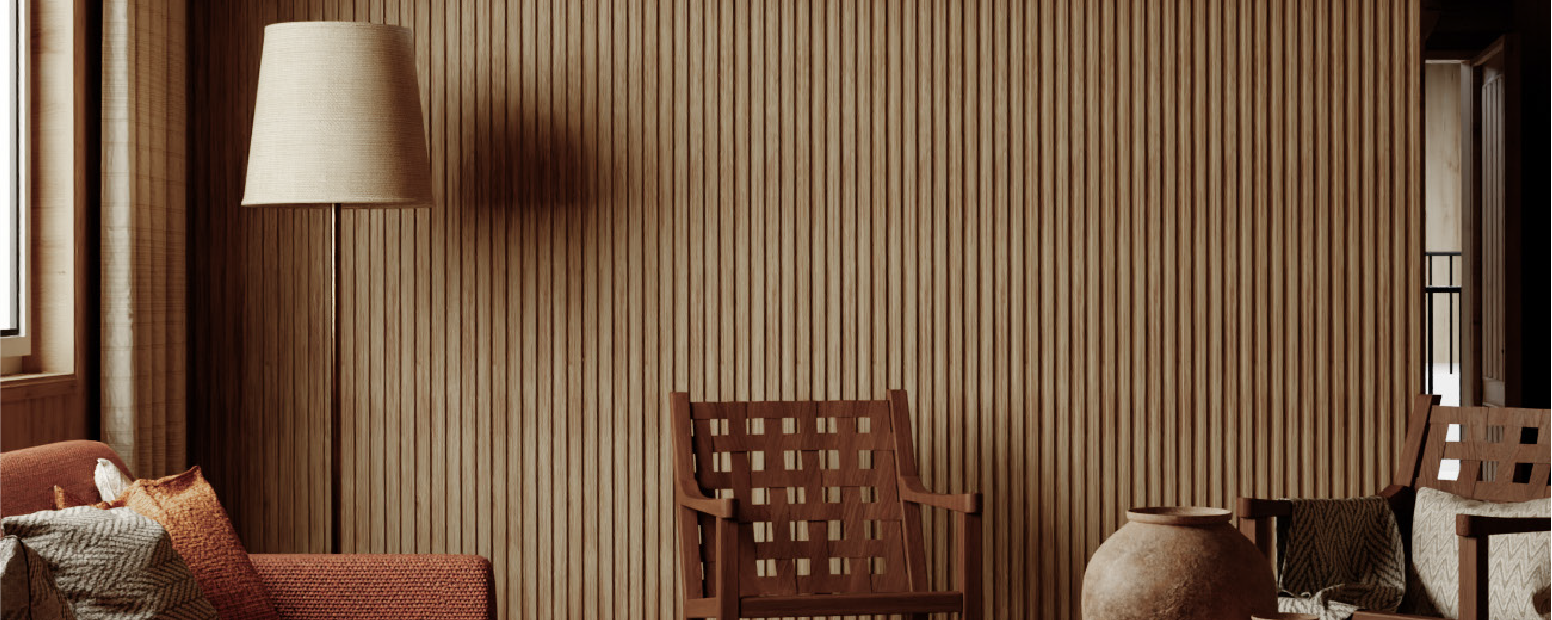
What Are Wall Louvers?
Louvers are commonly installed:
- Vertically to make a room appear taller
- Horizontally to make a wall appear wider
- Behind a television or sofa
- Around reception counters
- As full or partial feature walls
- With mirrors, laminates, lighting or cabinets
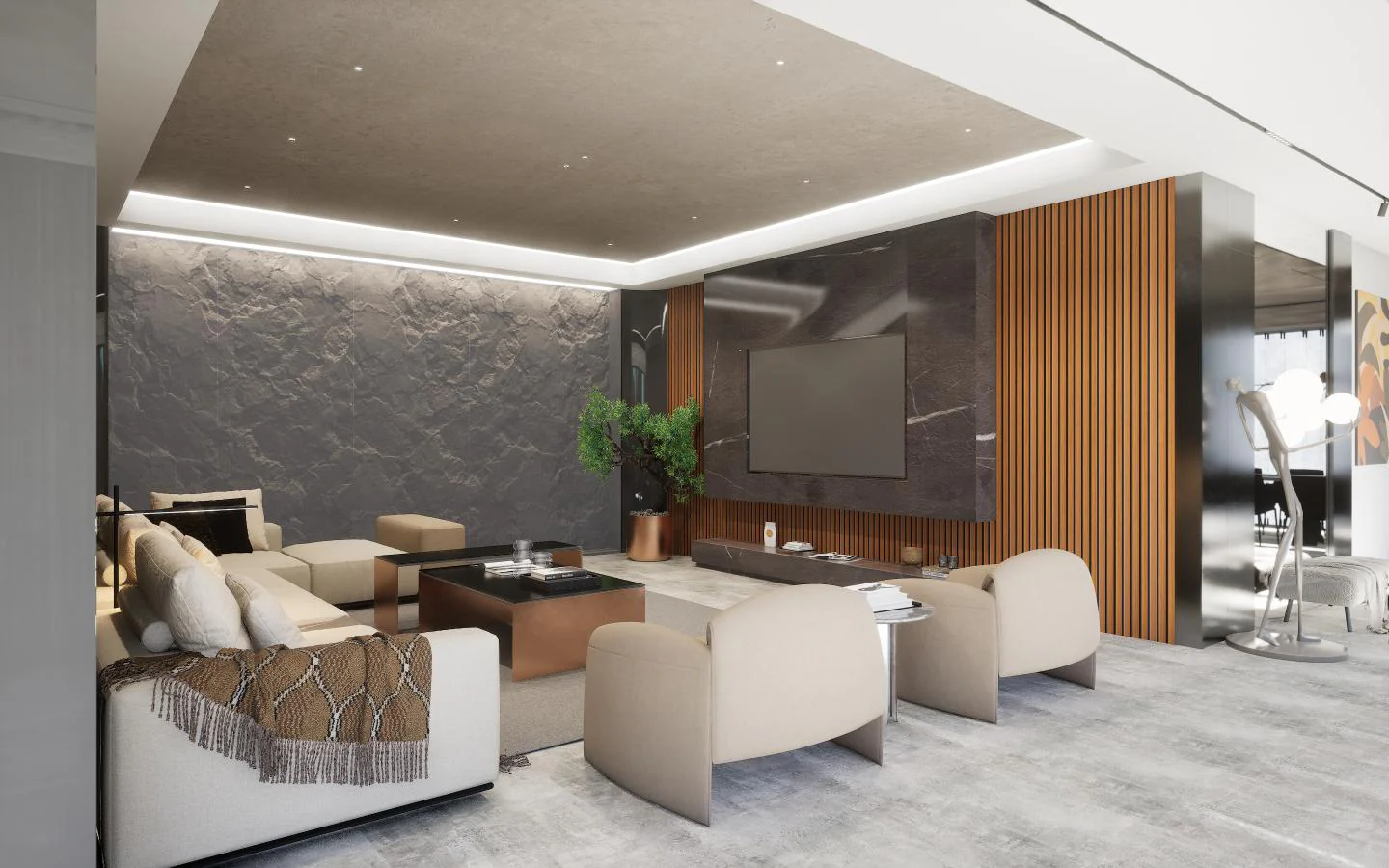
Depending on the product, louvers may be manufactured from MDF, HDF, polystyrene, WPC, natural wood or other engineered materials.
Common Names for Wall Louvers in Nepal
Customers, carpenters and interior designers in Nepal may use different names for similar decorative wall products.
| Common name | Meaning |
|---|---|
| Wall Louvers | General term for decorative slatted wall panels |
| Louver Panels | Another commonly used name for wall louvers |
| Fluted Wall Panels | Panels with repeated vertical or horizontal grooves |
| Charcoal Louvers | Lightweight decorative panels commonly made from PS or composite material |
| Charcoal Panels | Common market name for charcoal-based decorative wall panels |
| PS Louvers | Polystyrene-based decorative louver panels |
| WPC Louvers | Wood-plastic composite decorative panels |
| MDF/HDF Louvers | Louvers manufactured using engineered wood fiberboard |
| Wooden Louvers | Natural wood or wood-finished decorative slats |
| Slat Wall Panels | Panels made to look like repeated wooden strips |
| Groove Wall Panels | Decorative panels featuring grooved patterns |
| TV Wall Panels | Market term for decorative panels used behind televisions |
Common Types of Wall Louvers Available in Nepal
1. MDF/HDF Louvers
MDF and HDF louvers are engineered wood-based decorative panels. They generally offer defined profiles, consistent dimensions and attractive wood-grain finishes.
Common applications:
- Living room feature walls
- Bedroom headboard walls
- TV-unit backgrounds
- Office interiors
- Restaurants and showrooms
MDF and HDF products are generally recommended for dry interior spaces. They should not be installed over damp walls or in areas with direct water exposure unless specifically approved by the manufacturer.
2. PS Louvers
PS louvers are primarily manufactured from polystyrene. They are lightweight and available in many wood, marble, metallic and solid-colour finishes.
Common applications:
- TV-unit walls
- Bedrooms
- Cafés and restaurants
- Reception areas
- Retail interiors
PS louvers are commonly selected for their lightweight construction and easy maintenance. However, quality and performance may differ between manufacturers.
3. Charcoal Louvers
“Charcoal louvers” is a widely used market term in Nepal for lightweight decorative fluted panels. Many products sold under this name are PS or composite panels with decorative surface films.
Common applications:
- Feature walls
- TV backgrounds
- Office reception areas
- Restaurants
- Hotels and commercial interiors
Because “charcoal louver” is often used as a general market name, customers should ask about the actual material and technical specifications.
4. WPC Louvers
WPC louvers are made from a combination of wood fiber and plastic-based materials. They generally offer better moisture resistance than standard MDF products.
Common applications:
- Interior feature walls
- Kitchens and utility areas
- Commercial interiors
- Selected covered areas
Not every WPC panel is approved for direct sunlight or outdoor exposure. Always confirm the manufacturer’s recommendations before using it on exterior walls.
5. Wooden Louvers
Wooden louvers are manufactured from natural timber, wood veneer or wood-finished engineered materials. They provide a warm and premium appearance.
Common applications:
- Luxury homes
- Hotels and resorts
- Executive offices
- Premium restaurants
- Custom partitions
Natural wood may require polishing, sealing and periodic maintenance depending on environmental conditions.
6. Acoustic Slat Panels
Acoustic slat panels normally combine decorative wooden slats with sound-absorbing felt or similar backing material.
Common applications:
- Meeting rooms
- Studios
- Home theatres
- Offices
- Restaurants
- Conference halls
They provide decorative value while helping reduce sound reflection. However, their acoustic performance depends on their construction and installation system.
Why Are Wall Louvers Popular in Nepal?
Modern and premium appearance
Louvers can quickly transform a simple wall into an attractive feature. Their raised profiles create shadows that add visual depth to the interior.
Faster than custom wooden work
Ready-made panels reduce the on-site work required to construct individual wooden strips. They also provide more consistent spacing, colour and profile.
Variety of colours and designs
Wall louvers are available in:
Light oak, Natural wood, Teak, Walnut, Dark brown, Black, Grey, White, Marble-inspired finishes, Metallic finishes
This makes it easier to coordinate them with flooring, furniture, laminates and lighting.
Suitable for residential and commercial spaces
Louvers can be used in apartments, houses, offices, restaurants, hotels, retail stores and showrooms.
Easy to combine with other materials
Louvers work well with:
Decorative laminates, acrylic surfaces, Marble and stone, Mirrors, LED lighting, Painted walls, Cabinets and shelves
Common Louver Brand and Collection Names
In Nepal, many generic, imported and branded wall louver products are available. Customers may recognize them by material names such as PS louvers, charcoal louvers, WPC louvers or MDF louvers rather than by the manufacturer’s brand.
At Carpenters Stop, Vivre is the main louver brand. Its decorative louver range includes the following collections:
Vivre Elewood, Vivre Apex, Vivre Finesse, Vivre Louvers 2 and Vivre Flow
Where Can Wall Louvers Be Used?
Living room feature wall
A floor-to-ceiling louver wall behind the sofa can become the main focal point of the living room. Warm wood tones create a comfortable atmosphere, while dark shades produce a more dramatic appearance.
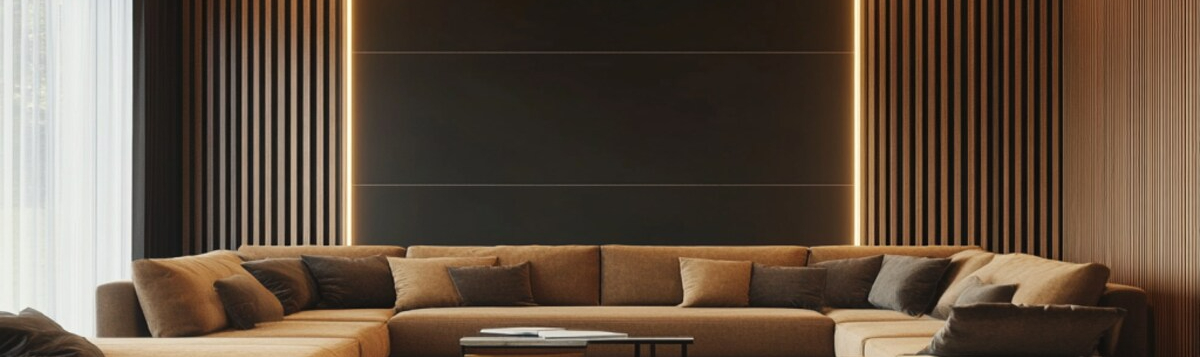
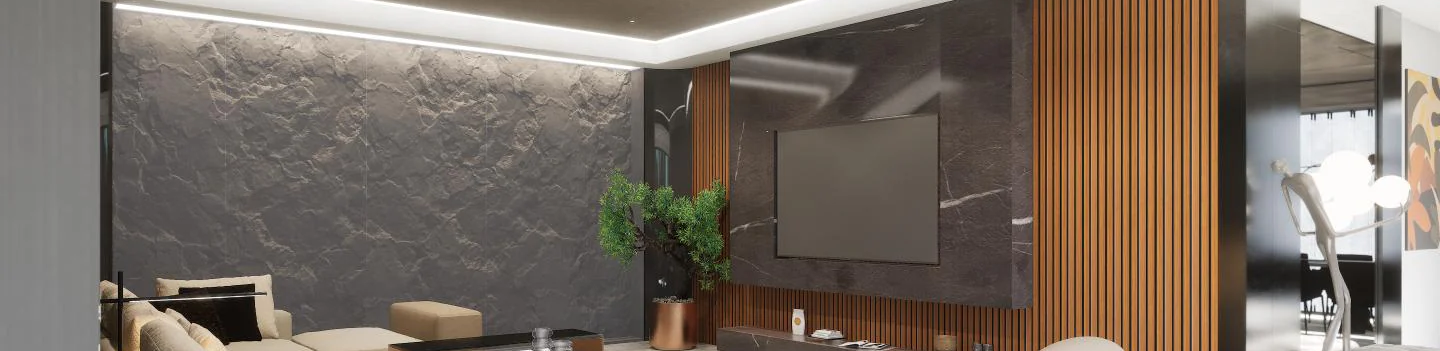
TV-unit background
Wall louvers are frequently combined with television cabinets, floating shelves, mirrors, laminates and concealed lighting.
The position of electrical points, television brackets, speakers and wires should be planned before installation.
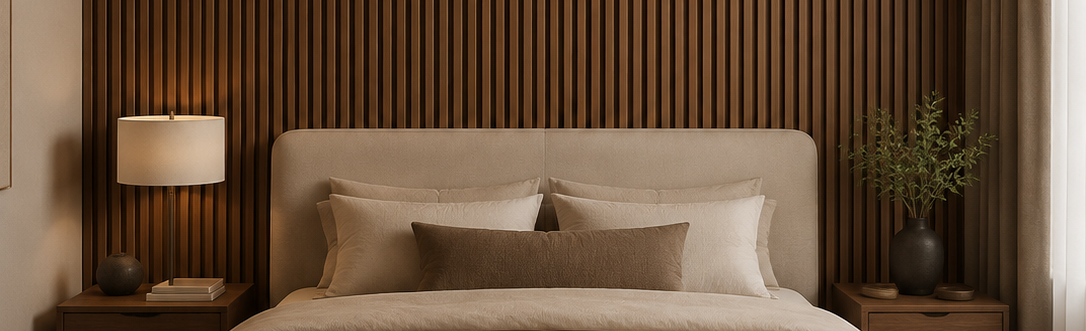
Bedroom headboard wall
Slim louvers in light wooden or neutral shades can create a calm and elegant background behind the bed.
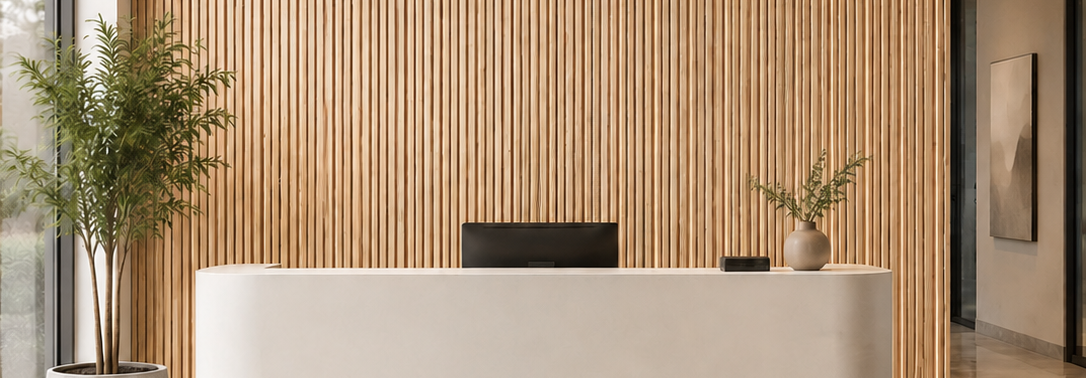
Office reception
Bold louver patterns can make a reception or waiting area look more professional. They can also be used as a background for the company’s logo.
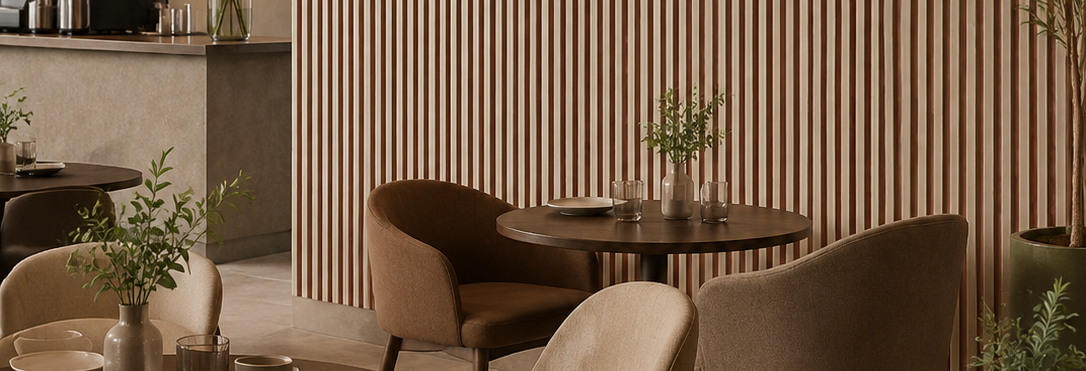
Restaurants and cafés
Louvers add warmth and character to dining spaces. They look particularly attractive when combined with plants, warm lighting and neutral furniture.
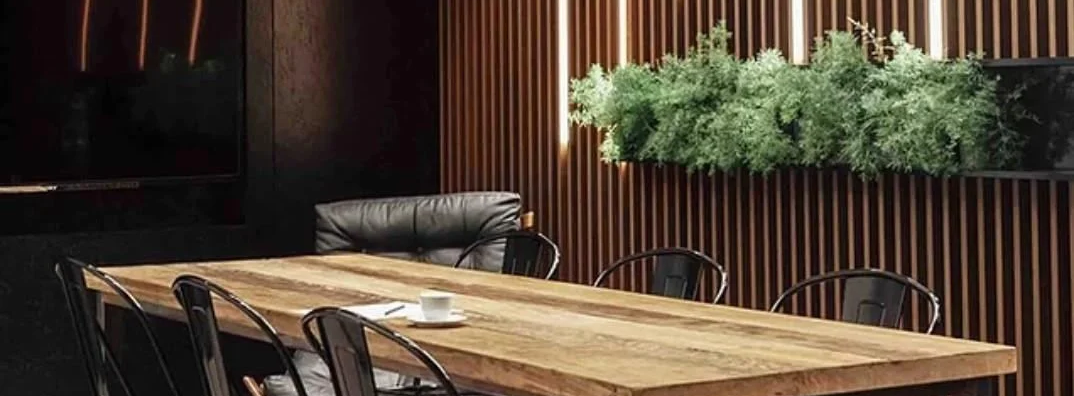
Hotels and commercial interiors
Louvers can be used in hotel lobbies, corridors, meeting rooms, showrooms and retail display areas to maintain a consistent interior theme.
How to Choose the Right Wall Louver
Check the actual material
Do not select a louver only by its colour or market name. Confirm whether the product is made from MDF, HDF, PS, WPC, natural wood or another composite material.
Consider the size of the room
Large and bold profiles create greater visual impact, but they may make a compact room feel crowded. Slim profiles are generally more suitable for bedrooms, narrow passages and small apartments.
Select a suitable colour
- Light wooden shades can make a compact room feel brighter.
- Walnut and dark shades create a rich appearance.
- Grey and neutral finishes suit modern offices.
- Warm wooden tones work well in homes, restaurants and hotels.
Compare physical samples with the flooring, furniture and lighting inside the actual room.
Consider moisture exposure
For standard MDF or HDF louvers, select a dry interior wall without water leakage or dampness. For areas exposed to higher moisture, consider PS or suitable WPC options after checking the manufacturer’s specifications.
Calculate the complete project cost
The total cost may include:
- Louver panels
- Backing board
- Adhesive
- Panel pins
- Edge finishing
- Carpentry labour
- Lighting and electrical work
- Transportation
Comparing only the panel price may not provide an accurate project estimate.
Wall Louver Installation Process
Professional installation is recommended to achieve consistent alignment and clean finishing.
A typical installation process includes:
- Inspecting the wall for cracks, seepage and dampness.
- Repairing the source of any moisture before installation.
- Measuring the wall and calculating the required quantity.
- Planning panel joints, corners and electrical points.
- Preparing the wall or installing a backing board where required.
- Marking reference lines using a spirit level.
- Fixing panels using suitable adhesive and fasteners.
- Finishing exposed edges, corners and joints.
- Checking the entire wall for alignment and consistency.
The exact fixing method depends on the louver’s material, dimensions, profile and manufacturer’s instructions.
Can Louvers Be Installed on Damp Walls?
Wall louvers should not be installed directly over damp or leaking walls.
During Nepal’s monsoon season, moisture may enter through exterior cracks, plumbing leaks, roofs or ground-floor walls. Installing decorative panels over the problem may trap moisture and damage the louver, adhesive or backing board.
Before installation:
- Identify the source of moisture.
- Repair cracks or leakage.
- Allow the wall to dry completely.
- Apply suitable waterproofing treatment if required.
- Confirm that the selected louver is appropriate for the location.
Standard indoor MDF or HDF louvers should generally be avoided in bathrooms, exterior walls and areas with direct water exposure.
Are Wall Louvers Waterproof?
Not every wall louver is waterproof.
The level of moisture resistance depends on the core material, surface film, joints and installation method. MDF, HDF, PS and WPC louvers do not offer identical performance.
Some PS and WPC products may provide better resistance to moisture than standard MDF louvers, but this does not automatically make every product suitable for outdoor use, direct rain or continuous water exposure.
Always check the manufacturer’s technical specifications before installation.
Cleaning and Maintenance
Wall louvers are relatively easy to maintain, although dust may collect inside the grooves.
For regular cleaning:
- Use a soft microfibre cloth.
- Use a feather duster for narrow grooves.
- Use a soft brush or low-suction vacuum when necessary.
- Wipe stains with a slightly damp cloth if permitted.
- Do not spray water directly onto the wall.
- Avoid abrasive cleaners and harsh chemicals.
- Repair nearby water leakage immediately.
Wall Louver Price in Nepal
Wall louver prices in Nepal vary according to:
- Material
- Brand and collection
- Panel dimensions
- Thickness
- Profile and design
- Surface finish
- Required quantity
- Installation accessories
- Labour charges
- Delivery location
Prices may be quoted per piece, running foot or square foot. Therefore, customers should confirm the panel’s complete dimensions before comparing prices from different suppliers.
For an accurate quotation, provide:
- Wall width
- Wall height
- Preferred material
- Selected colour or collection
- Project location
- Installation requirement
Where to Buy Wall Louvers in Nepal
Carpenters Stop offers MDF/HDF Vivre louvers and other decorative wall-panel solutions for residential and commercial projects.
Customers can explore the Vivre Elewood, Apex, Finesse, Louvers 2 and Flow collections and compare physical samples before making a decision.
Products can be delivered across Nepal, subject to stock availability, quantity and transportation arrangements.
Website: www.carpentersstop.com.np
Phone/WhatsApp: +977 9801984543
Conclusion
Wall louvers—also called fluted panels, charcoal louvers, decorative wall panels or TV wall panels—are an effective way to add texture and modern character to interiors.
MDF/HDF, PS, charcoal, WPC and wooden louvers each have different features and applications. Customers should consider the material, wall condition, moisture exposure, design and total installation cost before purchasing.
For Vivre louver samples, product selection and current pricing, contact Carpenters Stop.
Frequently asked questions
Here are some common questions about our company.
Wall louvers are also known as louver panels, fluted panels, charcoal louvers, decorative wall panels, wooden slats and TV wall panels.
The terms are often used interchangeably in the Nepali market. However, “charcoal louver” is a broad market name, while PS refers specifically to polystyrene. Always confirm the product’s actual material.
MDF/HDF, PS, charcoal and WPC louvers may all be used for TV walls. The best choice depends on the required design, wall condition, budget and moisture exposure.
MDF/HDF louvers can be used in dry indoor spaces during the monsoon, but they should not be installed over damp walls or in areas with direct water exposure.
Only when the manufacturer specifically approves the product for outdoor use. Not every WPC louver is designed to tolerate direct sunlight, rain and changing temperatures.
Professional installation is recommended because correct measurement, levelling, joining and edge finishing are important for achieving a clean result.